Maximizing Business Impact with Strategic Billboard Advertising and High-Visibility Locations
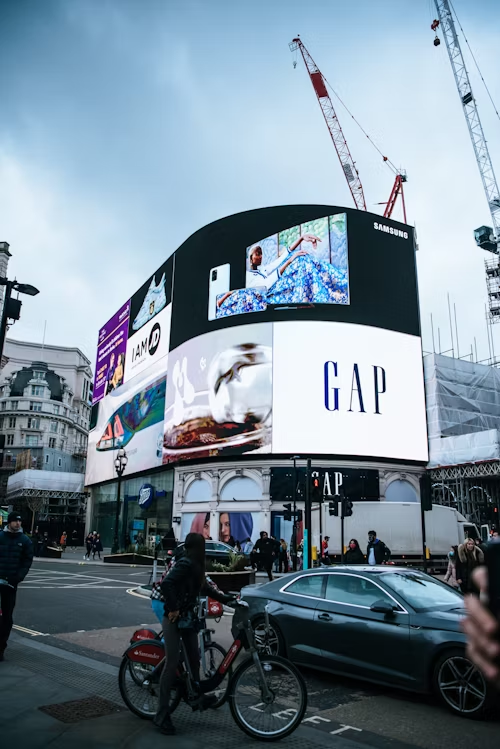
Billboard advertising remains an influential force in high-stakes marketing strategies. Despite the surge in digital marketing, the physical presence and broad reach of billboards offer unique advantages in brand visibility and consumer engagement. Understanding billboard exposure metrics, identifying high-visibility billboard locations, and strategically choosing to advertise on major highways can transform how businesses connect with their audiences on multiple levels.
The Science Behind Billboard Exposure Metrics
Effective billboard advertising starts with a deep understanding of exposure metrics. These metrics often determine the potential reach and impact of a billboard and include daily effective circulation (DEC), visibility adjusted impressions (VAI), and the opportunity to see (OTS). These indicators help advertisers gauge how many people see their ads and, importantly, how well these ads capture attention.
- Daily Effective Circulation (DEC): Measures the number of vehicles and pedestrians that pass by a billboard daily, providing a raw estimate of an ad's exposure.
- Visibility Adjusted Impressions (VAI): Takes into account factors like viewing distance, angle, and obstructions, offering a more accurate impression count.
- Opportunity to See (OTS): This metric estimates how many people have the chance to see the billboard, considering factors such as speed of travel and time of exposure.
By analyzing these metrics, businesses can optimize billboard placement to ensure maximum visibility and engagement, leading to a higher return on investment (ROI) in their advertising campaigns.
Choosing High-Visibility Billboard Locations
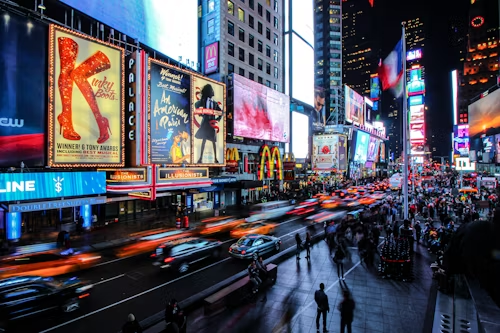
Location is paramount in billboard advertising. High-traffic areas such as downtown city centers, major intersections, and bustling highways offer prime real estate for billboards. However, the process of selecting these locations goes beyond just identifying busy areas.
- Demographic Targeting: Understanding the demographic profile of the people who frequent specific locations can help tailor messaging that resonates more effectively with the intended audience.
- Competitor Analysis: Checking for competitor billboards in the vicinity can provide insights into market saturation and opportunities for unique placement.
- Local Regulations and Zoning Laws: These can heavily influence billboard placement. Familiarity with local laws is necessary to avoid legal issues and to identify feasible advertising spots.
Combining these elements with exposure metrics ensures that the selected locations are not only high-traffic but also align with strategic marketing goals and audience targeting.
The Benefits of Advertising on Major Highways
Major highways are among the most coveted locations for billboard advertising due to their massive reach and the diversity of the audience. Vehicles on highways are typically on longer journeys, potentially increasing the duration of exposure to billboard advertisements.
- Extended Exposure: Unlike urban settings where billboards might only be visible for a few seconds, highway billboards are often visible for much longer, allowing for a more prolonged impact on commuters.
- Broader Audience Reach: Highways are used by a wide range of demographics, providing a unique opportunity to impact varied audience groups simultaneously.
- Frequency of Impressions: Regular commuters are likely to see your billboard multiple times, reinforcing brand recognition and increasing the likelihood of consumer action.
Strategically placed highway billboards can dramatically increase a brand's visibility, making advertising on major highways a desirable strategy for businesses aiming to expand their reach and influence.
Integrating Billboard Advertising with Digital Strategies
In an era where digital dominates, integrating traditional billboard advertising with digital marketing strategies can enhance the overall effectiveness of both. Seamless integration involves leveraging data from digital campaigns to inform and refine billboard advertising strategies.
- Data-Driven Placement: Using data from online marketing analyses, businesses can identify geographical areas and demographics that respond well to certain types of messaging and imagery, guiding the placement of physical billboards.
- QR Codes and URLs: Incorporating interactive elements like QR codes or specific URLs on billboards can bridge the gap between physical and digital realms, driving traffic to digital platforms.
- Consistent Branding: Ensuring that billboard designs reflect the same messaging and aesthetics as digital campaigns creates a cohesive brand experience across different media.
This holistic approach not only maximizes the reach and resonance of the advertising but also provides measurable insights across platforms, leading to more informed marketing decisions and improved campaign performance.
Case Studies: Success Stories in Billboard Advertising
Real-world examples often provide the best insights into the effectiveness of billboard advertising. Several businesses have leveraged high-visibility billboard locations and strategic highway placements to achieve remarkable marketing success.
- Case Study 1: A national retailer reported a 33% increase in store traffic following the launch of a targeted billboard campaign along several major highways leading into key markets.
- Case Study 2: A tech company used data-driven insights to place billboards in high-tech corridors, resulting in a 50% boost in website traffic and a 20% increase in sales inquiries.
- Case Study 3: A health and wellness brand integrated QR codes on their billboards, directly connecting consumers to a promotional landing page, which saw a 40% increase in engagement.
These examples underline the potential of well-planned billboard advertising campaigns to significantly impact business outcomes.
Conclusion: Why Billboard Advertising Still Matters
In the digital age, the tangible impact of a well-placed billboard can't be underestimated. From enhancing brand visibility to bolstering digital marketing efforts, billboard advertising offers a robust platform for businesses to convey their message. By understanding and utilizing exposure metrics, choosing strategic locations, and integrating with digital strategies, companies can ensure that their billboard advertising not only captures attention but also drives real business results.