Outdoor Brand Awareness Campaigns: How City Billboards and Interactive Ads Drive Results in 2026
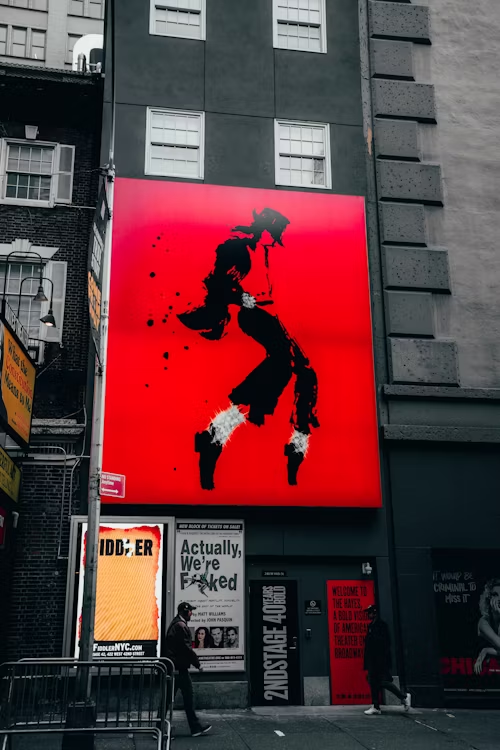
Brands seeking street visibility need a reliable out-of-home strategy. In 2026, city billboard advertising remains cost‑efficient for high‑traffic audiences, especially when paired with interactive billboards and smart rental tactics. Below is a practical playbook to plan, execute, and measure an effective outdoor brand awareness campaign.
Key takeaway: A well‑executed city billboard strategy can boost local brand recognition by 30–45% while keeping costs under control when you use data‑driven placement and interactive features.Why Outdoor Brand Awareness Matters
Outdoor ads deliver the highest reach for quick, memorable impressions. Unlike blockable digital channels, billboards capture every commuter, tourist, and passerby in real time. Its physical presence means people see the same visual repeatedly while navigating streets, building familiarity that digital ads lack. Outdoor media also reaches beyond device owners, essential for broad demographics. In many metros, city billboard CPMs are lower than online displays when compared to sustained brand lift.
Benefits of Outdoor Brand Awareness Campaigns
- High visibility in targeted urban cores
- Longer dwell time compared to online ads
- Credibility boost through association with physical space
- Scalable reach from local to national markets
- Synergy with digital retargeting efforts
- Opportunity for multi‑sensory engagement (sound, motion)
Brands pairing billboards with social media hashtags see measurable engagement lifts; consistency across touchpoints is key.
City Billboard Advertising Basics
Choosing the right location and format underpins success. Evaluate these critical factors before signing a lease.
Essential Elements of City Billboard Placement
- Traffic volume: High daily vehicle counts guarantee exposure.
- Demographic match: Align with your target audience’s age, income, and interests.
- Visibility windows: Peak commute hours yield the highest impressions.
- Ad format: Static vs. digital; each has cost and creative implications.
- Regulatory compliance: Local zoning laws can restrict content or timing.
New to billboards? Begin with one high‑traffic spot where core customers dwell and scale later based on performance data. Use local traffic studies and demographic heat maps. For instance, a downtown office district may generate 40,000 daily impressions but only 20% match your target age group; a nearby university billboard might perform better despite lower volume.
Interactive Billboard Ads: What Makes Them Different?
Interactive billboards engage viewers beyond static ads, turning passersby into participants and generating buzz and data.
Types of Interactive Features
- QR Codes: Direct users to landing pages or offers.
- Motion Sensors: Trigger animations when people pass by.
- Social media integrations (live feeds, hashtags)
- Gamified experiences (AR filters, instant win games)
- Real‑time data displays (weather, traffic updates)
A QR code linking to a limited offer can boost foot traffic by ~12%; ensure fast loading pages. Keep the user journey short—a clear cue (“Scan for a surprise”) and one tap to open an app or page. Motion sensors should trigger subtle animations (e.g., a splash of color) to stay engaging without overwhelming.
Cost‑Efficient Billboard Rentals: Tips & Tricks
Budgeting is the main hurdle; strategic planning reduces costs and maximizes reach.
Strategies to Keep Billboard Costs Low
- Negotiate multi‑month contracts: Bulk rates often cut 10–15% off monthly fees.
- Leverage off‑peak placement: Billboards outside of rush hour can be cheaper.
- Choose shared spaces: Co‑renting a billboard slot with another brand splits costs.
- Use digital billboards for dynamic content but schedule them during lower‑rate periods.
- Opt for smaller formats (e.g., 10x12) when the target audience is localized.
Bundling creative development with media buying also helps; many agencies provide package deals that lower overall costs. Cheapest isn’t always best—low‑traffic billboards waste budget even if cheap.
Out‑of‑Home Advertising Strategy: Integrating Billboards into Campaigns
Billboards alone have limits; integration amplifies impact.
Key Steps to Build an Integrated OOH Campaign
- Create a unified creative brief: All assets should share the same core message and visual style.
- Align timing: Coordinate billboard launch with digital push, PR events, or product releases.
- Use data to refine targeting: Analyze foot traffic patterns and adjust placement accordingly.
- Incorporate call‑to‑action that directs viewers to online engagement (hashtags, QR codes).
- Track performance using unique URLs, UTM parameters, and local analytics dashboards.
Geofencing lets you send push notifications to mobiles within 500 m of the billboard, bridging physical and digital touchpoints and boosting click-throughs by up to 20%. Syncing a billboard launch with a live stream can double early buzz; cross‑platform consistency reinforces recall.
Common Mistakes and How to Avoid Them
Even seasoned marketers fall into pitfalls that dilute billboard effectiveness. Here’s how to steer clear.
- Poor readability: Small fonts or cluttered layouts reduce impact.
- Lack of a clear CTA: Viewers may admire the design but not act.
- Over‑reliance on static images in a digital‑ready world.
- Ignoring local regulations that could force ad removal.
- Failing to measure ROI with proper attribution tools.
Use 3–4 words per line and WCAG AA contrast for readability. CTAs should be one action verb (“Scan Now”). Test QR codes beforehand to avoid low success rates that erode trust. Skipping these steps can make spend feel sunk; always test creatives locally before national rollout.
Case Study: A Recent Outdoor Campaign for a Local Brewery
A craft brewery sought to lift weekend foot traffic in downtown Las Vegas; we used a city billboard, interactive QR codes, and a limited offer.
- Location: 5th Street near the Strip, high pedestrian volume.
- Creative: Bold typography, local beer imagery, QR code linking to a “Buy 2 Get 1” offer.
- Duration: Two weeks during summer weekends.
- Results: 38% increase in weekend sales and a 22% rise in social media mentions.
We started with a foot‑traffic audit. The QR code sat in a dynamic frame changing colors every 15 s to attract viewers without overstimulating. A mobile‑optimized landing page collected data and auto‑applied the promo at checkout. The case shows that data‑driven placement, clear messaging, and interactivity yield measurable results.
Wrap Up & Next Steps
Billboard advertising is still key to outdoor brand awareness; strategic placement, interactivity, cost efficiency, and a cohesive plan deliver high visibility and ROI. Audit your media mix for gaps where billboards can support digital or experiential touchpoints. Build a detailed budget covering creative, placement, and post‑campaign measurements like brand lift or mobile attribution. The most successful campaigns treat billboards within a broader ecosystem—integrating digital touchpoints, using data, and refining creatives in real time.
What city billboard placement strategy has worked best for your brand, and how did you measure its impact?