What Are the Current Prices and ROI of Advertising on Billboards in 2026?

When a brand asks, “Should we buy billboard space?” they’re really asking about cost versus impact. In 2026, large‑format advertising remains a powerful channel, but the economics and measurement methods have evolved. This article breaks down the current pricing structures, how to calculate return on investment, what to look for when renting space, and common pitfalls that can erode value.
Why Billboards Still Matter in 2026
Billboard advertising is often dismissed as an old‑school tactic, yet it still delivers high frequency exposure to a captive audience. Vehicles, commuters, and pedestrians all see the same message multiple times each day, creating a cumulative effect that digital channels cannot match.
Unlike social media ads that can be skipped or ignored, billboards occupy physical space. They force viewers to pause, read, and internalize a brand’s key takeaway. In fast‑paced urban environments, a well‑placed billboard can become an iconic landmark for local culture or a memorable visual anchor for national campaigns.
Large-format advertising also offers a level of credibility that digital ads struggle with. The sheer size, design quality, and permanence convey stability and investment in the community—qualities that resonate with consumers who value authenticity over fleeting clicks.
Key Advantages of Billboards
- High frequency exposure to local audiences
- Credibility through physical presence
- Synergy with digital campaigns via QR codes and social handles
- Opportunity for creative storytelling at scale
- Longer lifespan compared to digital ad bursts
In short, billboards remain a strategic asset when leveraged correctly.
Types of Billboard Formats and Where They Fit
The billboard market in 2026 is segmented into several format categories. Each has distinct pricing tiers and audience reach characteristics.
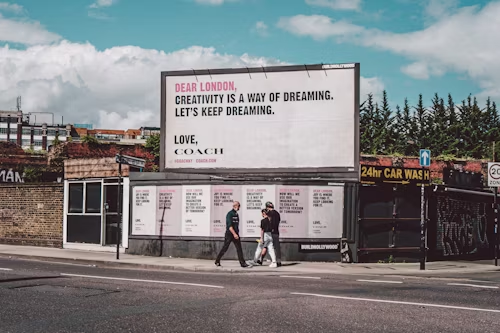
Traditional “Standard” billboards—typically 14x48 feet—are the most common. They sit on highway exits, city corners, or near transit hubs and offer broad exposure to drivers and pedestrians alike.
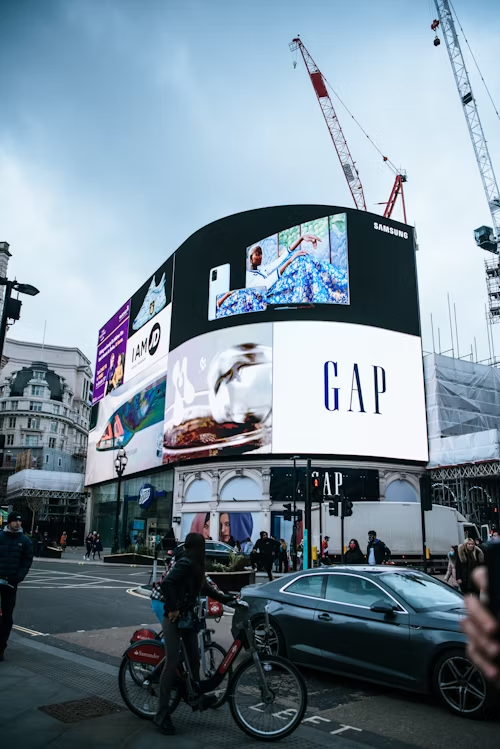
“Digital” billboards use LED panels that can display dynamic content, change messages multiple times per day, and even integrate real‑time data such as weather or traffic conditions. While the creative flexibility is higher, so is the cost.
Other niche formats include “Transit” billboards on buses or subways, “Pano” billboards—curved panels that wrap around corners—and “Street Furniture” like bus shelters and kiosks, which target foot traffic in dense urban centers.
Common Billboard Formats
- Standard (Static) – 14x48 ft
- Digital LED – up to 20k lumens
- Transit – bus or subway walls
- Pano/Curved – 18x60 ft with wrap‑around design
- Street Furniture – bus shelters, kiosks, and benches
Selecting the right format depends on your audience density, message complexity, and budget.
Understanding Billboard Pricing Models
The cost of billboard space is influenced by multiple variables. Understanding each factor helps you negotiate better rates and avoid hidden fees.
1️⃣ Location Premiums: High‑traffic highways or downtown intersections command the highest prices due to greater viewership. Rural or secondary roads are more affordable but may reach fewer potential customers.
2️⃣ Size and Visibility: Larger panels attract higher rates because they offer a larger canvas for creative expression and capture more attention. However, bigger sizes also require more sophisticated production costs.
3️⃣ Duration of Lease: Short‑term rentals (e.g., 30–60 days) are priced at a premium per day compared to long‑term contracts that span several months or a year. Flexibility often comes with higher daily rates.
4️⃣ Digital vs. Static: Digital billboards typically cost 2–3 times more than static ones due to the ability to change content and the technology maintenance fees.
5️⃣ Production Costs: The design, printing, or digital rendering of your creative adds to total spend. For static ads, you’ll pay for high‑resolution printing; for digital, you’ll pay for pixel mapping and software licensing.
Typical Pricing Ranges (2026)
- Standard static – $3–$10 per square foot annually
- Digital LED – $8–$20 per square foot annually
- Transit panel – $2–$5 per square foot annually
- Pano/Curved – premium 30% over standard
- Street furniture – $1–$3 per square foot annually
These ranges vary by region; for example, New York City billboards can exceed $50/sq ft due to extreme demand.
Calculating ROI – The Billboard Impact Analysis
A billboard’s value is measured not just in impressions but in conversion outcomes. A systematic approach ensures you’re paying for results rather than vanity metrics.
Step 1: Define Objectives. Are you aiming to increase brand awareness, drive foot traffic, or boost sales? Each goal requires a different impact metric.
Step 2: Estimate Reach and Frequency. Use local media kits or billboard network data to determine how many unique viewers pass by and how often they see the ad. Multiply reach by frequency for total impressions.
Step 3: Convert Impressions to Actionable Metrics. Apply industry benchmarks—e.g., 1 in 10,000 impressions leads to a website visit; 1 in 100,000 leads to a sale. Adjust these ratios based on your audience and product category.
Step 4: Assign Monetary Value. Multiply the expected actions (leads, sales) by their average revenue per action. Subtract the billboard cost to calculate ROI.
In practice, many advertisers use a “cost per thousand impressions” (CPM) model as a quick sanity check. A CPM of $10 for 1,000 viewers translates to an annual spend that can be compared against projected incremental sales.
ROI Calculation Example
- Total impressions: 1,200,000 per year
- Conversion rate to website visit: 0.01% → 120 visits
- Average order value: $150
- Estimated incremental sales: 120 × $150 = $18,000
- Billboard cost: $15,000 per year
- Net ROI: $3,000 (20% return)
Adjust the assumptions to reflect your specific market and product.
Renting Billboard Space – Process and Negotiation Tips
Finding the right billboard involves more than spotting a vacant spot. A structured approach saves time, money, and ensures you get the exposure you need.
1️⃣ Identify Reliable Networks. Major networks like Clear Channel, Lamar, or local independent operators maintain databases of available space. Verify their coverage maps and audience data before committing.
2️⃣ Request a Media Kit. A comprehensive kit includes traffic counts, demographic profiles, and past campaign case studies. Compare multiple options to find the best fit for your target market.
3️⃣ Negotiate Lease Terms. Ask about rate reductions for longer commitments, bundling with other media (radio or digital), and early termination clauses if the campaign underperforms.
4️⃣ Clarify Production Responsibilities. Confirm whether the operator handles printing/installation or if you must provide creative assets. Some operators charge extra for custom framing or mounting.
5️⃣ Review Legal Agreements. Ensure there are clear provisions on content approval, damage liability, and renewal terms. A well‑draft contract protects both parties and keeps costs predictable.
Negotiation Checklist
- Ask for a 10–15% discount on long‑term leases
- Request inclusion of site maintenance in the price
- Negotiate a “performance guarantee” clause if available
- Confirm no hidden fees for design or installation
- Secure flexible cancellation terms with minimal penalties
These steps help you secure premium placements without overpaying.
Common Mistakes and How to Avoid Them
Avoiding pitfalls is crucial for maximizing billboard spend. Below are frequent errors that can dilute impact or inflate costs.
Misunderstanding Audience Data. Relying on generic traffic counts without demographic context leads to wasted exposure. Always cross‑reference viewer profiles with your target customer base.
Overcomplicating Creative. Billboards are seen for a few seconds; complex messages fail to register. Keep copy concise and visuals bold.
Ignoring Placement Timing. Placing an ad during low traffic periods (e.g., late night on a suburban road) reduces exposure dramatically. Align launch dates with peak traffic windows or special events.
Neglecting Measurement Integration. Without QR codes, call‑tracking numbers, or unique landing pages, you can’t attribute sales to the billboard. Embed measurable elements from day one.
- Lack of demographic alignment with traffic data
- Excessive text and cluttered design
- Inappropriate timing or seasonality
- No integrated measurement tools
- Failure to negotiate all cost components upfront
Addressing these areas ensures you get the most bang for your billboard buck.
Case Study Snapshot – A Small Brand’s Success
A local craft beer company launched a 30‑day static billboard campaign in Denver’s downtown. They invested $9,000 for a prime corner spot and leveraged a QR code that led to an exclusive discount page.
- Impressions: 650,000
- QR scans: 4,200 (0.65% of impressions)
- Redemptions: 1,050 (25% of scans)
- Total sales lift: $157,500 (average order value $150)
- Net profit from campaign: $148,500
- ROI: 1650%
The company also reported a 12% increase in social media mentions and a measurable spike in foot traffic at their taproom during the campaign period.
Conclusion
Billboard advertising remains a cost‑effective medium when approached with clear objectives, accurate data, and disciplined budgeting. In 2026, pricing continues to be driven by location premiums and format type, but the fundamental principle is the same: large‑format advertising delivers high-frequency exposure that digital channels cannot replicate.
By defining measurable goals, using robust impact analysis, negotiating transparent contracts, and avoiding common mistakes, marketers can extract maximum value from billboard spend. The key takeaway? Treat billboards as a strategic investment—measure outcomes, iterate, and integrate them into your broader media mix for sustained brand growth.
The real power of a billboard lies in its ability to create repeated, high‑visibility contact with a targeted audience; the ROI is only as strong as the precision of the data you use to plan, execute, and measure it. How have you balanced billboards with digital campaigns to maximize reach and ROI?