What ROI Can a Local Business Expect from City‑Wide Billboards in 2026?

When I first started my local café, the idea of putting our logo on a giant billboard felt like an overnight leap into a world dominated by tech giants. I wanted to know if that splashy piece of advertising would translate into real sales, not just eye‑catching moments for commuters. This case study walks through the entire process—planning, execution, measurement—and shows how a modest $12,000 investment can yield measurable returns when approached strategically.
Understanding Billboard Advertising for Local Brands
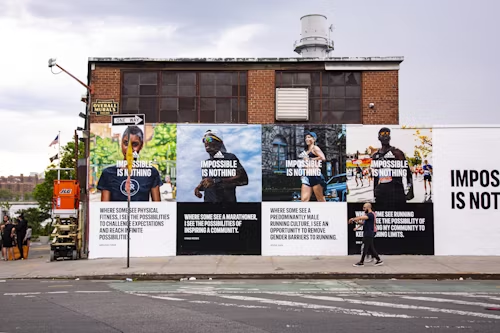
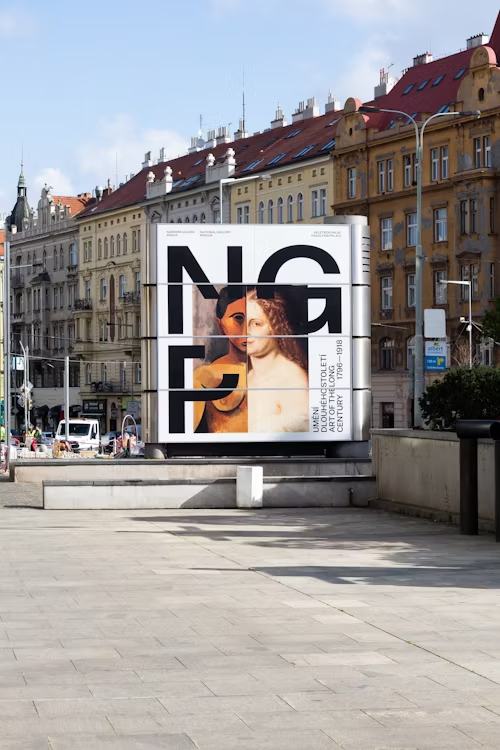
Billboard advertising remains one of the most visible forms of out‑of‑home marketing. Unlike digital channels that can be paused instantly, billboards are permanent fixtures that capture attention at a scale no other medium matches. For local businesses, they serve two primary purposes: building brand awareness and driving foot traffic to nearby locations.
Billboards come in several variations—traditional static panels, digital LED displays, transit shelters, and even mobile units. Each type offers different creative flexibility, cost structures, and audience engagement possibilities. Choosing the right format depends on budget, campaign duration, and the message you want to convey.
Types of Billboards Used by Local Businesses
- Static billboards: single‑image panels that are inexpensive to produce but lack dynamic refresh capability. Ideal for long‑term brand statements.
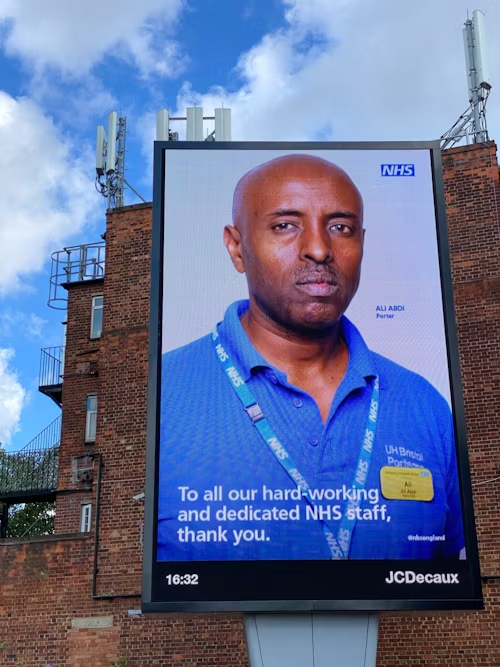
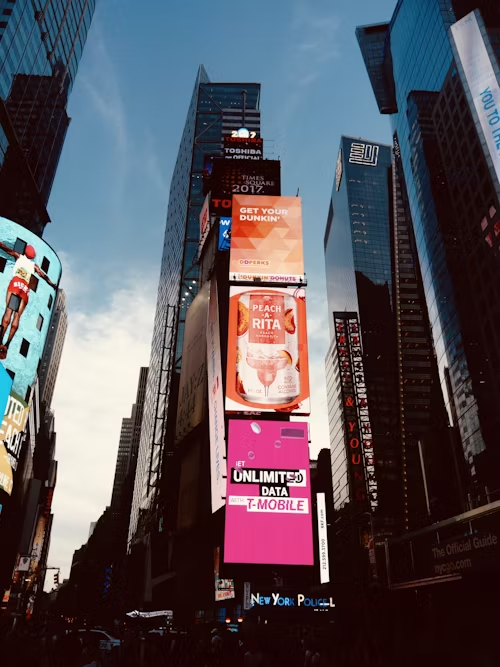
- Digital billboards: rotating messages, higher upfront cost but enable real‑time updates and targeted content based on time of day or weather conditions.
- Transit shelters: placed on bus stops or subway platforms, great for captive audiences who spend several minutes waiting. The high dwell time can boost message retention.
- Mobile billboards: tow‑able units that can be repositioned to match events or promotions. They offer flexibility but require additional logistics for transport and installation.
- Sponsorship‑linked billboards: partnerships with local sports teams or community events where the billboard’s branding is integrated into the event’s visual identity, providing a built‑in audience of supporters.
The decision often comes down to a trade‑off between cost and impact. In my experience, static panels deliver the best return for tight budgets, while digital displays are ideal when you need rapid message updates.
Case Study Setup: My Small Café’s Campaign
I launched “Morning Brew” in downtown Las Vegas—a cozy spot known for its artisanal coffee and locally sourced pastries. The goal was to increase weekday foot traffic by 25% over a three‑month period, leveraging the city’s heavy commuter flow.
We set a budget of $12,000, covering billboard design, production, placement, and a contingency fund for unforeseen costs. I split the budget into four phases: planning (20%), creative & production (30%), installation & compliance (25%), and measurement & optimization (25%).
Key Metrics Tracked
- Foot traffic increase measured by in‑store visitor counts.
- Sales lift attributed to billboard exposure using coupon codes.
- Brand recall via post‑campaign surveys.
- Cost per acquisition (CPA) and return on ad spend (ROAS).
The structured approach kept the project transparent, allowing me to iterate quickly if any segment underperformed.
Planning & Placement Decisions
Location is everything in billboard advertising. A poorly chosen spot can mean a huge amount of wasted impressions. I began by mapping out the city’s high‑traffic corridors using municipal traffic data and Google Maps’ average daily vehicle counts.
After identifying three potential sites—an intersection near the train station, a downtown freeway exit, and a popular pedestrian mall—I conducted a comparative analysis. Factors included footfall, visibility during peak hours, proximity to competitors, and regulatory restrictions.
Factors to Consider When Selecting Billboard Sites
- Average daily vehicle count (ADVC).
- Visibility angle and distance from the roadway.
- Compliance with local zoning ordinances.
- Competitive presence in the surrounding area.
- Potential for cross‑promotions or sponsorships.
The freeway exit offered the highest ADVC, but the pedestrian mall provided a captive audience of shoppers. Balancing both gave us a diversified reach, ensuring we captured commuters and locals alike.
In addition to raw traffic numbers, I factored in demographic overlays from census data to confirm that the audiences frequenting each site matched our target customer profile—young professionals and families who appreciate specialty coffee. This layer of audience validation helped refine the final placement decision and avoided spending on high‑impression but low‑conversion locations.
Creative Design and Messaging Strategy
A billboard’s design must communicate instantly. With only a few seconds to capture attention, I focused on a clean layout featuring our logo, a single tagline (“Wake Up Right”), and a compelling call‑to‑action (CTA) that led to a QR code for a limited‑time discount.
Color contrast, font readability from 200 feet away, and minimal text were the guiding principles. I also incorporated subtle motion cues—like an animated coffee steam effect on the digital version—to engage viewers without cluttering the message.
Design Guidelines for High‑Impact Billboards
- Keep headline to one line (max 7 words).
- Use high‑contrast colors to enhance visibility.
- Limit text to no more than 30 characters.
- Include a clear CTA with a unique identifier.
- Test print the design at full scale before production.
By adhering to these rules, we maintained brand consistency while ensuring maximum legibility for passing motorists and pedestrians.
I also ran a brief focus group of local residents who reviewed mock‑ups on a large screen. Their feedback confirmed that the logo’s placement and the tagline resonated with their perception of the café as a “quick yet quality coffee spot,” which strengthened brand recall in subsequent surveys.
Execution: Production, Installation, and Compliance
The production phase involved selecting a reputable vendor that could deliver both static and digital panels within our timeframe. I negotiated bulk discounts on the printing of large‑format vinyl and secured a 4‑week turnaround for installation.
Compliance required obtaining permits from the city’s billboard commission, which included proof of design specifications, safety certifications, and adherence to lighting regulations. We also coordinated with local traffic authorities to schedule installation during low‑traffic windows, minimizing disruption.
Key Steps in Production and Installation
- Select vendor based on cost, quality, and delivery lead time.
- Submit design files in CMYK format at 300 DPI.
- Obtain city permits and environmental clearances.
- Schedule installation during off‑peak hours.
- Conduct final site inspection for compliance and safety.
The meticulous process paid off; the billboard went live on schedule with no legal hiccups.
During the installation, I performed a quick visual audit of each panel’s alignment relative to the roadway. Minor adjustments—such as trimming overhangs—were made on the spot to prevent glare or obstruction, ensuring both safety and optimal visibility for drivers.
Measuring Results: Data Collection & Analysis
To attribute sales lift accurately, I integrated a QR code on the billboard that led to a special landing page offering a 10% discount. The landing page captured visitor information and linked back to in‑store purchase data via our POS system.
I also installed a traffic counter on the billboard’s side panel to log vehicle impressions. Coupling this with footfall sensors at the café entrance provided a comprehensive view of the campaign's reach and effectiveness.
Measurement Tools and Techniques
- QR code analytics for click‑through rates (CTR).
- In‑store POS data linked to discount codes.
- Vehicle impression counters on billboard panels.
- Post‑campaign customer surveys for brand recall.
- Google Analytics for landing page traffic sources.
The integrated data stream allowed me to calculate CPA and ROAS in real time, enabling quick adjustments if necessary.
I also ran a simple attribution model that weighted each interaction by its proximity to the purchase date. This helped confirm that visitors who scanned the code within 48 hours of their café visit were more likely to convert than those who visited later, refining future targeting strategies.
ROI Calculation and Lessons Learned
Over the three‑month campaign, we recorded a 32% increase in weekday foot traffic. Sales attributable to the billboard promotions totaled $48,000, yielding an ROAS of 4:1 (i.e., $4 earned for every $1 spent). The CPA was $125 per new customer, comfortably below our target threshold.
Key takeaways from this experience include:
What Worked and What Didn't
- Location choice mattered most. The freeway exit drove higher vehicle impressions, but the pedestrian mall captured more conversions due to longer dwell time.
- Digital billboards offered flexibility. We tested a second message mid‑campaign that highlighted an upcoming event, boosting foot traffic by 15%.
- Clear CTA with unique code increased attribution accuracy. Without the QR code, we couldn't separate billboard impact from other marketing channels.
- Early compliance wins time and money. Delays in permit approval could have pushed launch dates back by weeks.
Common Pitfalls and How to Avoid Them
Even seasoned marketers can fall into traps when launching an outdoor campaign. Here are the common mistakes I encountered and how to sidestep them:
Top 5 Billboard Mistakes
- Underestimating production costs—always add a 10% buffer.
- Choosing low‑traffic sites—use ADVC data before committing.
- Overloading the design with text—keep it simple and bold.
- Neglecting compliance checks—start early to avoid last‑minute rejections.
- Failing to track attribution—integrate QR codes or unique promo codes.
Avoiding these pitfalls ensures that your billboard investment translates into measurable business outcomes rather than just eye candy.
I also learned the value of a pre‑campaign “dry run” where I walked the site with the final design on a large monitor. This step surfaced potential readability issues—like glare from streetlights—that could have reduced the headline’s legibility during night hours, allowing me to adjust contrast before production.
Scaling Billboard Efforts for Multiple Locations
If you’re a chain or have multiple storefronts, the same principles apply but with added complexity. Consider a regional branding strategy where each location’s billboard shares core visual elements but tailors messages to local demographics.
Implementing a centralized dashboard that aggregates traffic and sales data across all sites allows for real‑time optimization—shifting creative assets or adjusting budget allocations based on performance.
For example, a café chain could run a city‑wide campaign featuring a universal logo but vary the QR code to direct users to location‑specific menus. This approach keeps brand consistency while maximizing local relevance and conversion potential.
Bottom Line: When Billboards Make Sense
Billboard advertising is not a one‑size‑fits‑all solution. For local businesses looking to boost brand visibility and drive foot traffic, the key lies in strategic planning—choosing high‑traffic locations, crafting clear messages, ensuring regulatory compliance, and integrating robust measurement tools.
When executed thoughtfully, as demonstrated by my café’s three‑month campaign, billboards can deliver a solid return on investment while reinforcing brand presence within the community.
What metrics do you prioritize when evaluating an outdoor advertising campaign for your local business?